Book a Mindful Sales Keynote Speaker: A 2026 Guide
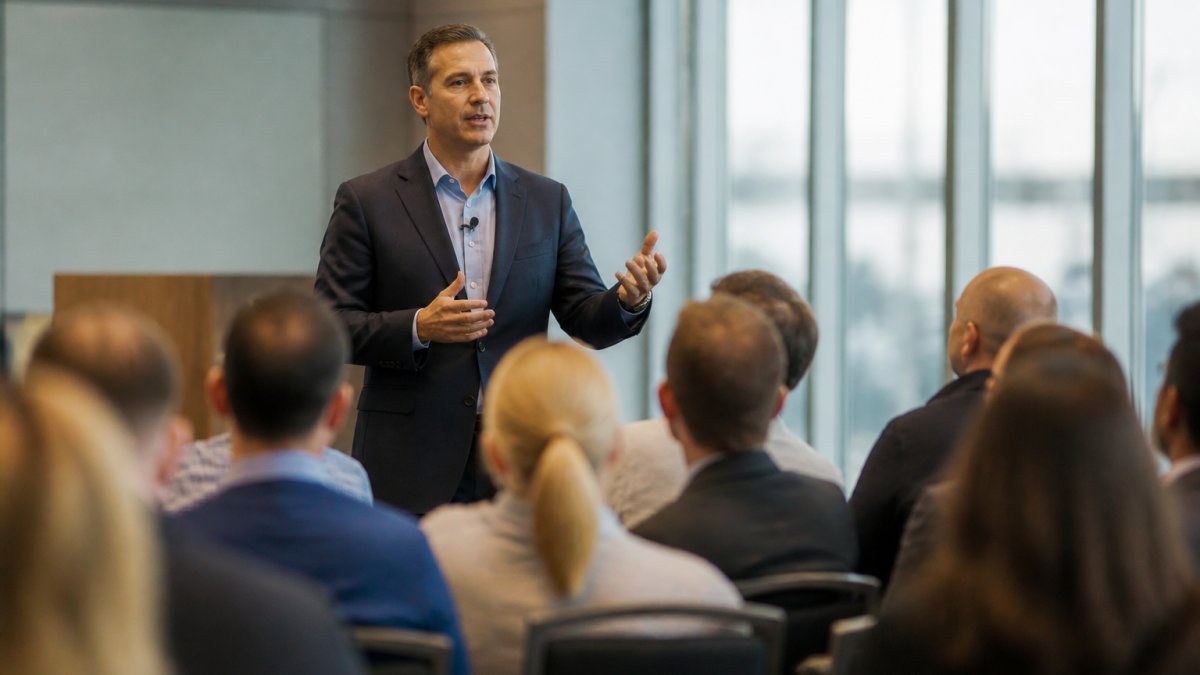
Learn how to book a mindful sales keynote speaker who integrates mindfulness and sales expertise.
Table of Contents
- What Makes a Mindful Sales Keynote Speaker Different
- Key Sales Keynote Topics to Cover in Your Event
- How Mindfulness Techniques for Sales Conversations Transform Team Performance
- Your Sales Speaker Booking Checklist
- Step 1: Define Your Event Goals and Success Metrics
- Step 2: Build a Shortlist Using Specific Criteria
- Step 3: Conduct Due Diligence on Every Finalist
- Step 4: Discuss Customization Before You Talk Price
- Step 5: Clarify Fees, Travel, and Contract Terms
- Step 6: Confirm Logistics and Technical Requirements
- Step 7: Plan the Post-Event Follow-Up
- Step 8: Debrief and Measure
- Planning Your Mindful Sales Workshop for Maximum Impact
- Measuring Results After Your Keynote or Workshop
- Frequently Asked Questions
Last Updated: October 12, 2026
What Makes a Mindful Sales Keynote Speaker Different
A mindful sales keynote speaker combines proven sales expertise with intentional mindfulness training to help teams perform under pressure.
Most sales training ignores the mental toll of rejection, competition, and constant target pressure. Aaron Hendon brings over 30 years of real estate sales experience plus certified mindfulness instruction, creating a framework for high-performing sales teams.
When you book a mindful sales keynote speaker, you get a presenter who understands both the metrics your team tracks and the mental resilience required to hit them.
Key Sales Keynote Topics to Cover in Your Event
Your sales keynote should address the specific pressures your team faces.
Attention and focus under pressure. Sales professionals operate in constant distraction, notifications, competing priorities, and closing pressure fragment attention.
Resilience and handling rejection. Sales involves constant rejection.
Stress management for sustainable performance. Burnout isn't weakness, it's a predictable outcome of high-pressure environments without recovery practices.
How Mindfulness Techniques for Sales Conversations Transform Team Performance
Mindfulness techniques for sales conversations aren't about meditation breaks or wellness culture.

When a prospect raises an objection, most salespeople shift into defense mode or script-recitation.
The practical impact: better conversations, higher close rates, and less emotional exhaustion. Your team stops burning energy fighting anxiety and redirects it toward understanding prospects.
Aaron Hendon's Mindful Sales Method integrates these techniques into your team's actual workflow.
Your Sales Speaker Booking Checklist
Most speaker directories give you a list of names, not the workflow from defining event goals to signing a contract. Use this checklist to book a mindful sales keynote speaker with confidence.
Step 1: Define Your Event Goals and Success Metrics
Before contacting any speaker, write down what you want the keynote to achieve. Vague goals like "motivate the team" lead to vague results. Concrete goals sound like:
- Reduce burnout-related turnover in the next two quarters.
- Improve discovery call quality as rated by sales managers.
- Equip managers with coaching language for high-pressure conversations.
Share these goals with the speaker on your first call. A strong mindful sales keynote speaker will ask follow-up questions and suggest how to measure progress. If a speaker only talks about their talk and never asks about your outcomes, that's a warning sign.
Step 2: Build a Shortlist Using Specific Criteria
Search for speakers who combine sales credibility with mindfulness training. Directories let you filter by topic, but verify the substance yourself. Use these filters:
- Sales role experience. Did the speaker carry a quota, manage a sales team, or run a brokerage? Your team will test their credibility in the first five minutes.
- Mindfulness credentials. Look for formal training, certification, or a documented practice. Self-described "mindful" speakers without training may deliver generic wellness content.
- Audience fit. Have they spoken to sales teams in your industry or a similar sales motion? A keynote for real estate agents differs from one for enterprise SaaS sellers.
Step 3: Conduct Due Diligence on Every Finalist
Due diligence separates a great booking from a risky one. Ask each finalist for:
- A full sample talk. Not just a highlight reel. Watch at least 20 minutes of uninterrupted delivery. Note how they handle audience interaction and whether the mindfulness content feels integrated or bolted on.
- References from similar events. Ask for two or three references from sales organizations of similar size and industry. Call them. Ask what changed after the event and whether they would rebook.
- Credentials and claims verification. Check published books, media features, and certifications. If a speaker claims a proprietary method, ask what it's based on and whether there is evidence behind it.
Step 4: Discuss Customization Before You Talk Price
Customization is where a mindful sales keynote speaker earns their fee. Ask:
- How will you tailor examples to our industry and sales cycle?
- What pre-event discovery do you need? (e.g., manager interviews, call recordings, survey data)
- How do you adjust content for individual contributors versus sales managers?
- What follow-up materials or reinforcement do you provide?
A speaker who says "I customize every talk" without asking for your input is not customizing. One who sends a detailed intake questionnaire and schedules a discovery call is.
Step 5: Clarify Fees, Travel, and Contract Terms
Fee structures vary: some charge a flat keynote fee, others per day plus travel and expenses. Ask for a written quote itemizing:
- Keynote or workshop fee
- Travel, lodging, and ground transportation
- Materials, workbooks, or post-event resources
- Any licensing fees for recording or distributing the content
Review cancellation and rescheduling terms, often a non-refundable deposit with a sliding scale. Understand what happens if your date changes or the speaker has an emergency. Reputable speakers carry backup plans and clear terms.
Step 6: Confirm Logistics and Technical Requirements
Ask for a technical rider listing audio, visual, staging, and internet needs, and confirm who provides what. For virtual or hybrid events, test the platform in advance and have a backup plan. A professional speaker will have a checklist and a logistics point person. Coordinating these technical requirements alongside professional corporate event photography ensures that every visual aspect of the presentation remains seamless and well-documented.
Step 7: Plan the Post-Event Follow-Up
Before the event, agree on what happens after: a recording, worksheets, a follow-up Q&A, or slides. Build these into the contract so your team can revisit the material when motivation fades.
Step 8: Debrief and Measure
Within two weeks, collect feedback from attendees and managers and compare results against your Step 1 goals. Use the measurement section below to structure your review, and share findings with the speaker if you plan to rebook or refer them.
This workflow takes more effort than clicking "book now," but it protects your budget and increases the odds your team changes behavior.
Planning Your Mindful Sales Workshop for Maximum Impact
If you're moving beyond a single keynote to a multi-session workshop, structure it for retention and application.
A one-time keynote creates awareness; a workshop creates behavior change. Plan your mindful sales workshop with these elements:
Pre-workshop preparation. Send materials before the event to prime attention and help your team arrive ready to engage rather than skeptical. Aaron Hendon's approach includes pre-event resources that prepare participants to get maximum value.
Hands-on practice during sessions. The best workshops give your team time to practice mindfulness techniques, not just hear about them.
Integration with your existing systems. The workshop should connect to your CRM, sales process, and team culture.
Accountability mechanisms. Plan how your team will maintain what they learn: peer accountability groups, manager check-ins, or a structured follow-up program.
Measuring Results After Your Keynote or Workshop
Most event planners collect a smile sheet and move on. That tells you whether people enjoyed the keynote, not whether it changed anything. To justify the investment and improve future events, measure before, during, and after.
Set Baselines Before You Book
You cannot prove impact without a baseline. Before the event, pull data for the metrics you care about. Common sales-team baselines include:
- Average deal cycle length
- Close rate on qualified opportunities
- Pipeline velocity (number of deals moving through stages per month)
- Voluntary turnover among sales staff
If you don't have these numbers, start collecting them now. Even a simple spreadsheet with monthly totals gives you something to compare against.
Choose Metrics That Match Your Goals
Different goals require different measures. Match your metrics to the outcomes you defined in the booking checklist:
- If your goal is retention: track voluntary turnover, exit interview themes, and engagement scores at 30, 60, and 90 days.
- If your goal is sales performance: track close rates, average deal size, and pipeline velocity for 60-90 days after the event.
- If your goal is manager capability: survey managers on their confidence in coaching resilience and emotional regulation, and ask for specific examples of changed behavior.
- If your goal is culture change: use anonymous pulse surveys to measure psychological safety, stress levels, and willingness to ask for help.
Collect Qualitative Data During and After
Numbers tell part of the story. Qualitative data explains why. Use these methods:
- Post-event survey with open-ended questions. Ask: What is one thing you will do differently? What felt most relevant? What felt disconnected from your reality?
- Manager interviews at 30 and 60 days. Ask managers what they observe in team meetings, call reviews, and one-on-ones. Look for specific examples, not general impressions.
- Focus groups with a cross-section of attendees. Include top performers, new hires, and skeptics. Skeptics often give the most useful feedback.
- Call or email sampling. If your team records sales calls, review a sample before and after the event. Look for changes in talk-to-listen ratio, objection handling, and tone.
Isolate the Keynote's Impact
You cannot run a controlled experiment in most sales organizations, but you can reduce noise:
- Compare similar teams. If only one region or team attended, compare their metrics to a similar team that did not attend.
- Track timing. Note other initiatives, product launches, or market changes that could affect results. Acknowledge them in your analysis.
- Use a simple pre/post design. Measure the same metrics for the same group before and after. If possible, add a comparison group.
- Ask attendees to self-report behavior change. A survey question like "How often have you used a technique from the keynote in the past two weeks?" gives you a leading indicator.
Set a Measurement Timeline
Use this timeline to structure your review:
- Immediately after the event: collect satisfaction and relevance scores, plus open-ended feedback.
- 30 days: survey attendees on behavior change, manager observations, and early metric shifts.
- 60 days: compare sales metrics and engagement scores to baseline. Interview managers again.
- 90 days: review retention, turnover, and sustained behavior change. Decide whether to continue, adjust, or expand the program.
Report Findings to Stakeholders
Write a one-page summary for leadership: the goals you set, baseline numbers, post-event numbers, and qualitative themes. Be honest about what worked and what didn't. If the keynote didn't move a metric, say so and explain what you'll try next. This transparency builds trust and makes future budget requests easier.
Use Findings to Improve the Next Event
Measurement isn't just for justification, use it to refine your approach. If attendees loved the mindfulness techniques but managers didn't reinforce them, plan a manager-only follow-up.
A mindful sales keynote speaker can help you design the measurement plan. Ask what they've seen work in similar organizations, the best speakers treat measurement as part of the engagement, not an afterthought.
Frequently Asked Questions
How do I book a mindful sales keynote speaker?
Start by identifying speakers with both sales expertise and certified mindfulness credentials. Review their background, past keynote topics, and client testimonials. Contact them or their agency directly with your event date, audience size, and goals. Discuss customization options, fees, and logistics before finalizing your contract. Confirm they understand your team's specific challenges, whether that's agent retention, burnout, or sales performance metrics.
What mindfulness techniques for sales conversations actually work?
Effective techniques include mindful listening to understand client needs without judgment, attention training to stay focused during objections, and emotional regulation practices to manage pressure and rejection. These methods help salespeople respond thoughtfully rather than react defensively. The best speakers teach practical, in-the-moment tools your team can apply during client calls, negotiations, and high-stress situations, not abstract meditation theory.
How is a mindful sales keynote different from standard sales training?
A mindful sales keynote combines performance coaching with mental clarity practices. Standard sales training focuses on techniques and scripts; mindful approaches address the underlying stress, attention, and emotional patterns that limit performance. A certified mindfulness instructor with sales background brings both worlds together, helping teams close more deals while reducing burnout and improving retention, which matters especially in competitive industries like real estate.
What should I ask a speaker before booking?
Ask about their certifications, years of sales experience, and which industries they've worked with. Request references from similar-sized teams or brokerages. Clarify what topics they'll cover and whether they customize for your specific challenges. Discuss post-keynote support, do they offer follow-up workshops, resources, or coaching? Confirm their approach to measuring results and whether they provide materials your team can use after the event.
Frequently Asked Questions
How do I book a mindful sales keynote speaker?
Start by identifying speakers with both sales expertise and certified mindfulness credentials. Review their background, past keynote topics, and client testimonials. Contact them or their agency directly with your event date, audience size, and goals. Discuss customization options, fees, and logistics before finalizing your contract. Confirm they understand your team's specific challenges—whether that's agent retention, burnout, or sales performance metrics.
What mindfulness techniques for sales conversations actually work?
Effective techniques include mindful listening to understand client needs without judgment, attention training to stay focused during objections, and emotional regulation practices to manage pressure and rejection. These methods help salespeople respond thoughtfully rather than react defensively. The best speakers teach practical, in-the-moment tools your team can apply during client calls, negotiations, and high-stress situations—not abstract meditation theory.
How is a mindful sales keynote different from standard sales training?
A mindful sales keynote combines performance coaching with mental clarity practices. Standard sales training focuses on techniques and scripts; mindful approaches address the underlying stress, attention, and emotional patterns that limit performance. A certified mindfulness instructor with sales background brings both worlds together, helping teams close more deals while reducing burnout and improving retention—which matters especially in competitive industries like real estate.
What should I ask a speaker before booking?
Ask about their certifications, years of sales experience, and which industries they've worked with. Request references from similar-sized teams or brokerages. Clarify what topics they'll cover and whether they customize for your specific challenges. Discuss post-keynote support—do they offer follow-up workshops, resources, or coaching? Confirm their approach to measuring results and whether they provide materials your team can use after the event.